
Login or Subscribe
You must be logged in to access this content
Subscribe for free access to Japanese Exotic Mushroom Journal and gain insider knowledge on effective cultivation methods for Japanese mushroom species. Elevate your skills with expert tips and innovative technologies to master the art of growing Japanese exotic mushrooms.
◆ Discover exclusive Japanese mushroom cultivation techniques
◆ Learn innovative methods to enhance mushroom quality and yield
◆ Tap into Japan's rich heritage for unique growing insights
◆ Discover exclusive Japanese mushroom cultivation techniques
◆ Learn innovative methods to enhance mushroom quality and yield
◆ Tap into Japan's rich heritage for unique growing insights
Subscribe Now for Free Login
Europe`s Potential: A Frontline Interview with ECLO`s Thibault Fastenakels
I had the opportunity recently to sit down the the co-founder of ECLO, Thibault Fastenakels. We had an excellent discussion, touching base on ECLO`s success and the particularities of the European market. Previously, we got a perspective from Central Europe, so this time it was nice to get the viewpoint of someone right in the heart of the Western European market. We discussed the specific difficulties ECLO faced, what new grower in this market face, the general market trends of the mushroom sector especially the specialty sector, and what the future holds for the business.- Jake: We talked a little bit previously about the biggest challenges when you were getting set up, and you said that financial challenges were very large. Getting the investment when you first started was the most difficult thing. That, and that it was difficult to get good consistency with your substrate.Thibault: Yeah. Exactly! That sums it up well, because consistency would be one long-running issue. Our supply of filter bags for growing mushrooms is sometimes difficult, maybe. It’s usually okay, but because it comes from China or Japan, if, I don’t know, there is a war or some major international issue, maybe we could run into supply issues with the bags or even for spare parts.Jake: Following up on that, I wanted to say that I find it interesting that it’s difficult for mushroom growers who are doing, you know, specialty species, “exotic” species. They can’t get financing in Europe, but all of these companies doing these bio-fermentation projects, and these companies that do hydroponic vegetables are able to get tens of millions of dollars easily, even though what they’re doing is not tested at scale and there’s no track record of achieving it profitably. These massive hydroponic-based urban farms and the people who using biofermentation tanks to produce only mycelia. They are the ones using a new technology that’s unproven. And yet, farms like you, which are trying to use proven technology from Asia, and yet, nobody wants to invest. Do you wonder why that is?Thibault: Because I think there was a big hype on “Urban Agriculture,” you know. And so, yeah, the market got a bit crazy about that, and they just wanted to make these super farms and get lots of media coverage. As we can see they all failed, almost all of them at least. They all Europe’s Potential: A Frontline Interview with ECLO’s Thibault Fastenakels I had the opportunity recently to sit down with the co-founder of ECLO, Thibault Fastenakels. We had an excellent discussion, touching base on ECLO’s success and the particularities of the European market. Previously, we got a perspective from Central Europe, so this time it was nice to get the viewpoint of someone right in the heart of the Western European market. We discussed the specific difficulties ECLO faced, what new growers in this market face, the general market trends of the mushroom sector especially the specialty sector, and what the future holds for the business. were making wild promises and ultimately they couldn’t back those up with results. There were even hydroponics startups in France, and then in Germany, that raised like 600 million euros, but then after 2 years, they failed. I don’t know why these ventures got as much funding as they did; it was just a hype stuff, that appealed to big financial companies, and now the investors know to be cautious. And so I think in the last one or two years, it’s become much harder to raise funds as a result.But fortunately, we started a bit before that happened. And you know, after one year of activity, we were already profitable. So, yeah, I think our business model is solid, and that’s the good thing about mushrooms.
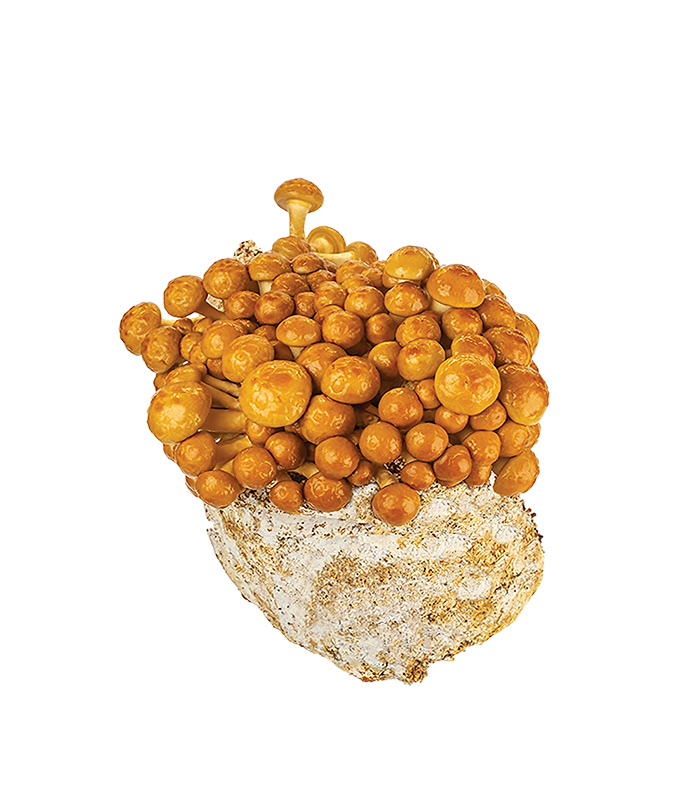
- A block with nameko fruiting bodies
- Jake: And so, you say that right now, it would be even harder if you were trying to start from scratch.Thibault: Now, it would be even harder. When you go to the banks now, it’s also much more difficult to get a loan. But in our case, because we all already have a big facility, we have experience, so I think it would be not so hard for us to get additional funding. But for a brand-new venture? It would be much more difficult to start from scratch.Jake: What’s been the biggest issue over the last year and a half with the Ukrainian War and the issues that you faced since then?Thibault: A little bit, the cost of energy, but I think that was not the biggest challenge. The biggest challenge? Yes, I think the hardest thing has been consistency in the production. No bacteria or failed incubations that’s the biggest challenge. And yeah, technical problems are also challenging. But, we always find a solution within a few days, so the challenges aren’t stopping us.I think it comes from the lack of experience of the European growers. You know that we don’t have the same experience as Japanese, and so we make mistakes.Jake: I see, so you had no problems with sourcing the sawdust or substrate material.Thibault: The raw material is okay. The supply is okay. But yeah, I think it also just doesn’t smell so good sometimes. I think sometimes our raw materials have a large bacterial load, and I think a part of the quality problem comes from the quality of the substrate ingredients.But as you know, in Japan, there are companies that just prepare the sawdust for the big producers. They make the sawdust for mushroom cultivation, and it’s an exact process. There are other companies that sell supplementation. You buy big bags with the perfect mix, right?In Europe, we don’t have this at all. So you have to find everything by yourself. Yeah, it’s tricky. But over the last two years, the supply has been stable. Three years ago, there was no sawdust anymore. No beech sawdust on the market.Jake: Then, let’s jump to the third question. This was a big one for me because I’ve been asking a lot of Europeans to get the opinion of people from different regions and countries.What misunderstandings, mistakes, or misconceptions about mushrooms, do you find from consumers and from your distributors? So, I see in Germany, for instance, I see pictures of shiitake, but they are stored open container outside in the sun or in unrefrigerated displays. They’re going to go bad very quickly, or people buy them, and they think they can eat the mushroom raw and these kinds of things. What kind of misunderstandings or incorrect ideas do you see?
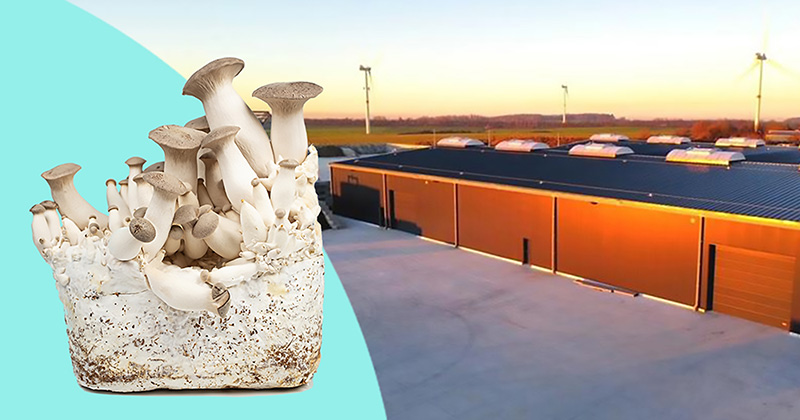
- Eryngii superimposed beside an outer shot of ECLO`s substrate production facilities.
- Thibault: Our customers are the mushroom farms who produce mushrooms. Sometimes the farm is a bit too small, and so they don’t have money to invest in good climate control systems, that is a common issue. Sometimes the consistency suffers because of this. But we havea few farms that are very proactive. They invest in good systems, and then they produce very good mushrooms and good yields. Other farms sometimes say “Well, we are not getting great yields,” but that is because they do not have the ideal facilities for growing these kinds of species.Jake: How is the market for exotic mushrooms doing in Europe? Particularly in Belgium and neighboring regions?Thibault: It is growing for sure. The consumption of mushrooms, exotic mushrooms in Europe is increasing. Apparently, the market is increasing seven percent per year in Europe.Jake: And so a big issue. Is not the consumer, but the production then; the farm itself?Thibault: Well, I think sometimes the mushrooms are not so beautiful at the supermarket and that is a problem. For example, in France. They grow all the exotic mushrooms on pasteurized straw substrates. This a very popular substrate. And with oyster mushrooms it is doable, but for shiitake it is not suitable, and so it results in bad shiitake, awful shiitake. And yeah, that’s not so good, you know, because it creates this misconception that shiitake are, you know, an ugly mushroom.Jake: What do you think about the market in Belgium and for you? You are located in Belgium, but you’re close to the Netherlands and you’re relatively close to a Cologne. So you have a very big market, and I think that even Paris is maybe two hours’, three hours’ drive, so you have a very a large market. How is demand across these different regions?Thibault: I think we are very well located. It is more important that we are close to Holland, because we don’t have any big customers in France. Something like only two percent or three percent of our substrate goes to France.The farms in Southern France, Italy, Spain, Portugal. They all use those kinds of pasteurized straw substrate I just talked about before. I think this a mistake. Except for oyster mushrooms because decent oyster mushrooms can be grown on this kind of substrate. But the biggest market is for sure Germany.Jake: And you’re producing the shiitake and the oysters. Also, do you work with eryngii and nameko as well?Thibault: Yes. The biggest production for us is eryngii. Very popular. Then, next would be shiitake followed by lion’s mane. We sell a lot of lion’s mane in England. Lion’s mane is not so trendy yet in Belgium and Holland. It is starting to creep up a little bit, but not like England yet. I think that England and America, you know, they are more attracted to new things. Continental Europe? It’s less open to change because we like things the way are. We have “Terroir” and old-fashioned ideas are what is trendy.Jake: That’s really unfortunate about France, because I’ve been in Japan and the French restaurants in Japan use lots of mushrooms, exotic mushrooms included. Eryngii or shiitake or maitake are wonderful, and they pair with French cuisine. So they do not use these kinds of mushrooms much in France itself.Thibault: No, they don’t use exotic mushrooms much.
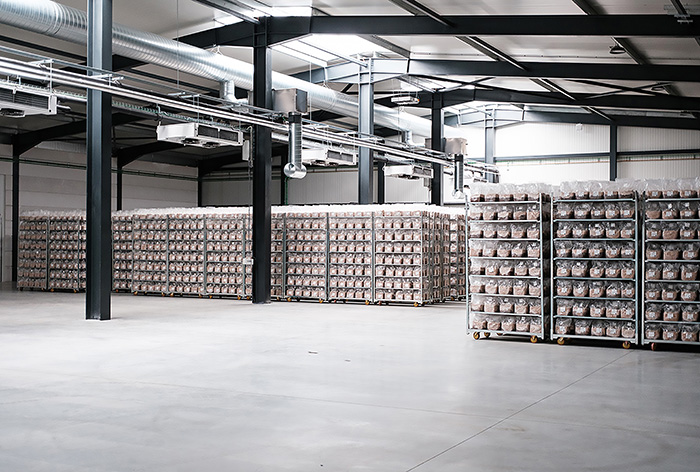
- One of ECLO’s incubation rooms. Thibault talked about the wasted vertical space and his desire to use two tiers of shelving.
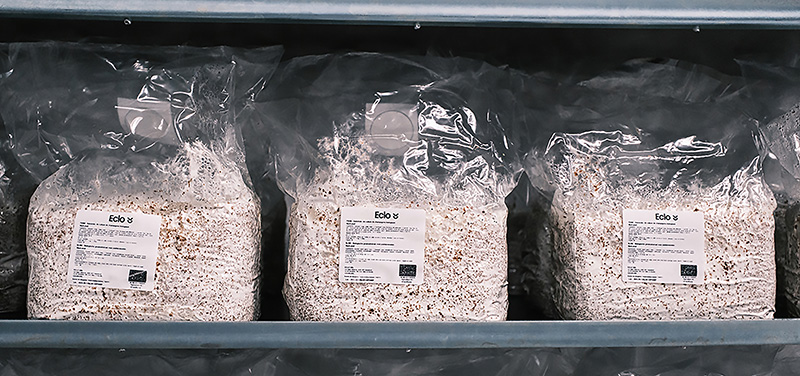
- Some blocks of substrate in the incubation room, still within their specialized filter bags.
- Jake: Well, hopefully you can penetrate the French market a bit. It’s a big market if you can.Thibault: That would be great, because yes, it is a lot of people. When we started the project, people told us, “With France alone you will be able to sell all your substrate.” But we sell much more substrate to the UK than to France.Jake: Have you had to change your approach from when you began, and you bought machinery from Japan and China? Like, you had an idea of what you wanted to do, but when you installed all of the equipment and you began producing substrate.Did you have to change your approach after you started? Did you think you would operate mostly like they do in Japan, but afterwards because of your laws, safety laws like CE and everything, you found that once you began running the farm, you had to change a lot of things? Or was it more or less like you planned?Thibault: Exactly like we planned. It was very easy at the beginning, I don’t know why. In general, we are always dealing with issues, but not at that time. The start of the factory was really good. We didn’t change the plan at all. I planned the project three years ago, and two years ago, we opened the factory, and it was exactly like we planned.Jake: That’s great to hear. I often hear from people in Europe who try to use like Japanese or Chinese systems and who end up having a lot of problems at the start, and they have to modify everything. But it sounds like you had a very good plan, and it worked well. Has there been anything you changed about the way you do incubation or how you approach shipping or incubation?Thibault: Mostly already what you were doing before. We are shipping mainly on Danish trolleys. These are big. I think it’s a good method, but it requires a lot of trolleys, and costs a lot of money. That is a bit problematic sometimes. We would like to use more of the space we have. During busy periods we have a lot of open space that we could use. The Danish trolleys are only two-meters high and our building is eight or nine meters.I met a farmer and they told me that at their farm in Canada they use a special trolley with no wheels and which are very sturdy. These are a bit more expensive for sure, but they are very strong and you can stack them on top of each other.Jake: Yes, in Japan most farms, make two tiers of shelves in their incubation rooms. I saw a shiitake farm in Nagasaki Prefecture that we wrote about for this journal. There they do three tiers, so it’s almost 12 meters of shiitake blocks stacked up to the ceiling. You just need a forklift. If you’ve got a forklift and the right shelving, you can stack, but then you need to make sure you have you know more powerful cooling and ventilation systems.My last question really was this: you are two years into the new factory, three years since you began planning. Right now, if, you know, the Thibault of 2025 could go back to the beginning with all your experience now, is there anything you would change or an advice you would give
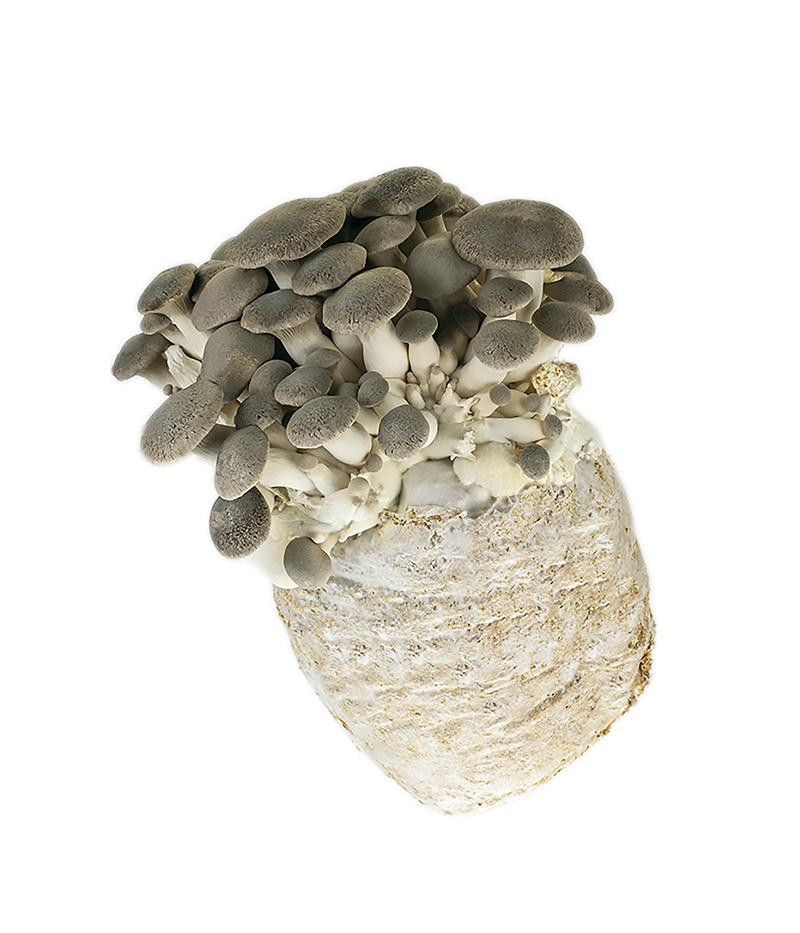
- Substrate with oyster mushroom fruiting bodies.
- Thibault: Honestly? Maybe two, three things, but very small details, because everything is working very well. Like, for one, our mixers are set up in a series. So, first substrate goes into one mixer, then it goes into a separate mixer, then, it goes into a conveyor, a horizontal conveyor, and splits off to each bagging machine. So, the bagging machines have a supply of material. Yes, maybe I would not do that if I went back in time today. I would set up two mixers in the parallel. So, I would make one mixer for one bagging machine, and then, on the other side, one mixer for the other bagging machine.What else would I maybe change… I would make a bigger fridge for mycelium. It’s not big enough these days, but this is a small mistake, and that’s about it. I think we did well.Jake: Yeah, those are very small details. My final question, is: How do you feel about Europe in general? I know this is very expansive; Europe is not the single country, but how do you feel the market is going? Do you feel that it will continue to grow, or do you think that it’s going to kind of drop off in the near future?Thibault: I think that the market will continue to grow. However, just in the last one or two months, I’ve become a bit concerned. With Donald Trump and everything related to the trade wars and economic uncertainty. The market has dropped a bit since last month, like, a lot actually, but this also partially because we are entering the summer season.Jake: And you work with regular farmers. Is there more interest recently for supplements? That’s very big in America, but has that not really hit Europe yet?Thibault: Now in Europe, as I said, we are the old continent, and we are not so open to new things, I think. There are a few people beginning to make mushroom-based supplements in England, and in France, there are maybe a few people who make supplements, but it’s not a major area of demand right now.Jake: Let’s see what the future will be. I wish you good luck with the sales and the production. Hopefully the market will pick up again once everything settles down. Thank you very much for your time today.
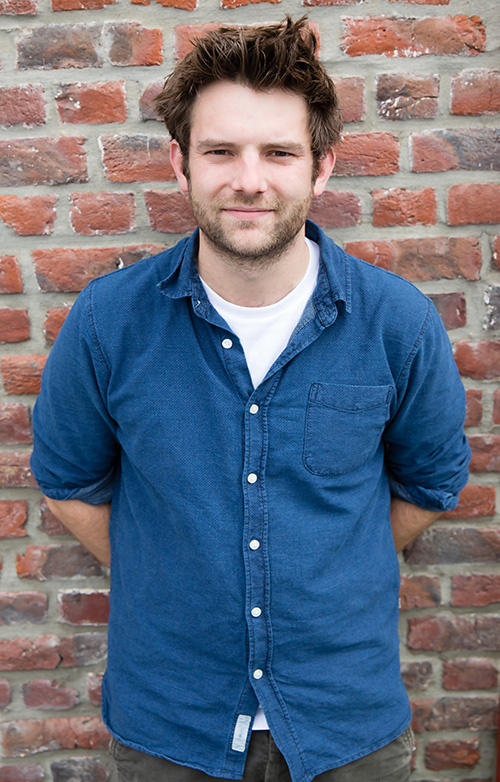
- Thibault Fastenakels on site.


 1-2-13 Honmachi, Komoro city, Nagano prefecture, Japan 384-0026